
 (No Ratings Yet)
 Loading...
Fullscreen



![Hello Kitty [HORROR]](https://printiloveyou.com/wp-content/uploads/2025/03/hello-kitty-horror.jpg "Hello Kitty [HORROR]")








 (No Ratings Yet)Loading...
Tomodachi Life: Living the Dream sold eight million copies within months of release, making it the best-performing entry the Tomodachi series has ever had — and it did that without combat, without a fail state, and without much of anything resembling a traditional goal. What it offers instead is an island full of Miis quietly living their own lives while you watch, nudge, and occasionally referee.
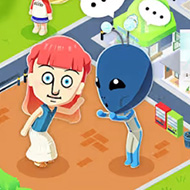
The defining trait of Tomodachi Life: Living the Dream is that its Miis — the customizable avatars who populate the island — develop relationships and run into problems on their own, whether or not you’re actively directing them. You’re overseeing the island rather than piloting every resident individually, which means a lot of the game’s charm comes from checking in on situations that started without your input: a friendship that formed on its own, an argument that needs settling, a resident who’s developed an opinion about your own player Mii.
Living the Dream is the third entry in the Tomodachi series, following the original Tomodachi Life, which launched in Japan in 2013 and worldwide the following year. That gap matters for how the sequel is built — it isn’t iterating on a recent predecessor so much as returning to a well-established format after over a decade, updating it for current hardware rather than reinventing the core loop that made the original resonate with players in the first place.
Players coming in expecting objectives, progression bars, or a clear win condition tend to be thrown by how little of that Tomodachi Life: Living the Dream actually has. The appeal instead comes from observation — watching how a specific Mii’s personality plays out over dozens of small interactions, or how a relationship you didn’t set up develops its own momentum. That open-endedness is exactly what longtime fans of the series point to when explaining why they kept coming back to the original for years after finishing whatever there was to “finish.”
Not every review has been uniformly positive about how much has actually changed since the original entry over a decade earlier. A recurring point of debate is whether the core loop needed a deeper overhaul rather than a visual and hardware refresh, since much of what defines the experience — the Mii behaviors, the low-stakes social simulation — carries over largely intact from a game over ten years old.
Not in the way you’d control a typical character. Miis act on their own initiative, forming relationships and reacting to situations independently, while you oversee the island and can nudge outcomes rather than dictate every action.
No. Living the Dream is built to stand on its own, though longtime fans of the original from 2013/2014 will recognize the same island-life format carried forward rather than replaced.
Tomodachi Life: Living the Dream isn’t trying to give every Mii on the island a scripted purpose, and that restraint is exactly why watching one specific resident’s unplanned friendship or feud can end up being more memorable than anything the game explicitly asked you to do.
There are no reviews yet. Be the first one to write one.