

 (No Ratings Yet)
 Loading...
Fullscreen



![Hello Kitty [HORROR]](https://printiloveyou.com/wp-content/uploads/2025/03/hello-kitty-horror.jpg "Hello Kitty [HORROR]")





 (No Ratings Yet)Loading...
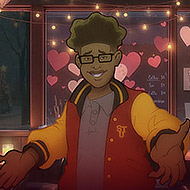
Love and Deepspace puts you in first-person conversation with characters who react to what you actually choose to say, and that single design decision is why it gets talked about differently than most mobile romance games — the dating half and the combat half aren’t bolted together, they run through the same affection system, so who you talk to changes how you fight.
You play a newly inaugurated Deepspace Hunter assigned to the UNICORNS team, and your defining trait isn’t romantic — it’s combat. Your Resonance Evol lets you amplify other people’s Evol skills and chain into team attacks, which means your character is functionally a support-and-amplify role built to work alongside whichever love interest you bring into a fight, not a bystander who happens to also fight monsters.
The five main love interests — Xavier, Zayne, Rafayel, Sylus, and Caleb — each carry their own Evol, their own combat role, and their own personal conflict against EVER, the game’s antagonist force. That variety isn’t cosmetic. Zayne leans into crowd control and durability, with abilities that hamper enemies and reduce incoming damage, making him a pick suited to strategic, defensive fights rather than pure damage racing. Choosing between them is as much a combat decision — melee damage versus crowd control versus shield-breaking versus AoE support — as it is a narrative one.
Every love interest has an affection meter tracking your bond with them, and it goes up through making specific dialogue choices during story events and taking part in character events and dates. Raising it does more than unlock romantic scenes — higher affection tiers open exclusive animations, voice clips, and in some cases bonus support skills, which means the dating layer of Love and Deepspace has a direct mechanical payoff in combat, not just a narrative one.
In combat, each character brings a Support Skill, a Resonance Skill, an Ardent Oath, and a Passive Skill into the fight, alongside a dash or dodge used to avoid enemy attacks and a normal attack for sustained damage. The Active Skill and Passive Skill split further into distinct triggers, so building a fight around a character means understanding when their Resonance Skill actually pays off rather than just mashing the strongest-looking button on cooldown.
A frequent point of debate in the community is how much affection-building content leans on repeated events and dialogue trees rather than new story beats, which can make chasing a higher bond with a specific character feel more like a grind than a natural relationship progression. It’s a real tension in the design: the same system that makes affection meaningful in combat also asks for a lot of repeated attention to keep climbing.
You can raise affection with more than one character across playthroughs, but each one’s personal story and combat-relevant bond content is tied specifically to them, so meaningfully progressing multiple routes takes real, separate time investment.
Both. Beyond exclusive animations and voice lines, higher affection tiers can unlock bonus support skills for that character, giving a genuine combat reason to invest in the relationship side rather than treating it as separate from fighting.
Zayne in particular stands out for players who prefer methodical fights — his crowd control and damage reduction abilities are built for outlasting a fight rather than rushing it.
Love and Deepspace works because it never lets the romance and the combat drift apart — every dialogue choice you make with Xavier, Zayne, Rafayel, Sylus, or Caleb eventually shows up again on the battlefield, which is the reason players stay invested in one route long after the initial story hook has faded.
There are no reviews yet. Be the first one to write one.